

The 12th Asian Conference on Aging & Gerontology (AGen2026)

March 22-27, 2026 | Tokyo International Forum & Toshi Center Hotel, Tokyo, Japan, and Online


Recognising and promoting the inherent dignity of people at all ages represents a foundational goal shared by societies around the world. The desire to identify meaning and value in life underpins inquiries into law and politics, religion and the arts, and it guides the resolution of ethical questions associated with scientific inquiry and resulting innovations. As medical science, public health and technology continue to advance, so lives have grown progressively longer. Increasingly, this leads to new questions regarding the kind of lives we will experience as we grow older. While advances in science and medicine increase longevity, what innovative technologies are emerging that address the changing needs faced by an aging world? Researchers, scientists, and advocates will gather in Tokyo for AGen2026 to discuss these questions and others.

Japan represents a unique location for research professionals to meet and explore the topic of aging. Japan has one of the most rapidly aging populations, which combined with a declining birthrate, represents a compelling example of the demographic transition resulting from increased longevity. The issues and challenges faced in Japan have expanded to other Pacific nations, Europe, Africa, and the Americas as all nations experience the benefits of increased longevity. Worldwide, there is a growing recognition that the kind of life we now give our elders will impact the way we will be treated and cared for as we enter our later years. Because aging is a worldwide phenomenon, the needs and opportunities of an aging world must also reflect and respect cultural and social diversity in developing programs that encourage quality of life at all ages. How do we address the collective needs of the aging population while respecting each person’s individuality? AGen2026 provides an ideal forum for discussing and debating the many issues related to aging and gerontology. Submissions from a variety of fields and perspectives are welcomed and encouraged. Original research across disciplines, including science and technology, philosophy and politics, sociology, and psychology, will ensure an active and exciting opportunity to expand our gerontological understanding.

Now entering its 12th year, the AGen2026 Programme Committee has seen the conference grow in size and diversity of perspectives as it attracts researchers and practitioners from around the world to address this crucial topic. For this year's event AGen will be partnering with The 16th Asian Conference on Psychology & the Behavioral Sciences (ACP2026) and The 12th Asian Conference on Education & International Development (ACEID2026), increasing opportunities for broad multidisciplinary exchanges. Registration the conference allows access to sessions in the other two.

Held in partnership with the IAFOR Research Centre at the Osaka School of International Public Policy (OSIPP) at Osaka University, this international conference encourages academics and scholars to meet and exchange ideas and views in a forum stimulating respectful dialogue. This event will afford an exceptional opportunity for renewing old acquaintances, making new contacts, networking, and facilitating partnerships across national and disciplinary borders.

In conjunction with our Global Partners, we look forward to extending you a warm welcome to Tokyo in 2026.

The AGen2026 Programme Committee


Key Information
  • Location & Venue: Held in Tokyo, Japan, and online
  • Dates: Sunday, March 22, 2026 ​to Friday, March 27, 2026
  • Early Bird Abstract Submission Deadline: September 18, 2025*
  • Final Abstract Submission Deadline: December 12, 2025
  • Registration Deadline for Presenters: January 22, 2026

*Submit early to take advantage of the discounted registration rates. Learn more about our registration options.


Speakers

To be Announced

  • Evangelia Chrysikou
    Evangelia Chrysikou
    University College London, United Kingdom
  • William C. Frick
    William C. Frick
    University of Sharjah, United Arab Emirates
  • Kiichi Fujiwara
    Kiichi Fujiwara
    Juntendo University, Japan
  • Héctor García
    Héctor García
    Author, Japan
  • Seoyoun Kim
    Seoyoun Kim
    University of Michigan & NACDA Program on Aging, United States
  • Kathryn M. Lavender
    Kathryn M. Lavender
    National Archive of Computerized Data on Aging (NACDA), United States
  • James W. McNally
    James W. McNally
    University of Michigan & NACDA Program on Aging, United States
  • Fathali M. Moghaddam
    Fathali M. Moghaddam
    Georgetown University, United States
  • Monty P. Satiadarma
    Monty P. Satiadarma
    Tarumanagara University, Indonesia
  • Yukiko Sawano
    Yukiko Sawano
    University of the Sacred Heart, Japan
  • Lowell Sheppard
    Lowell Sheppard
    Never Too Late Academy & IAFOR, Japan
  • Dexter Da Silva
    Dexter Da Silva
    Keisen University, Japan

IAFOR's Conference Themes for 2025-2029
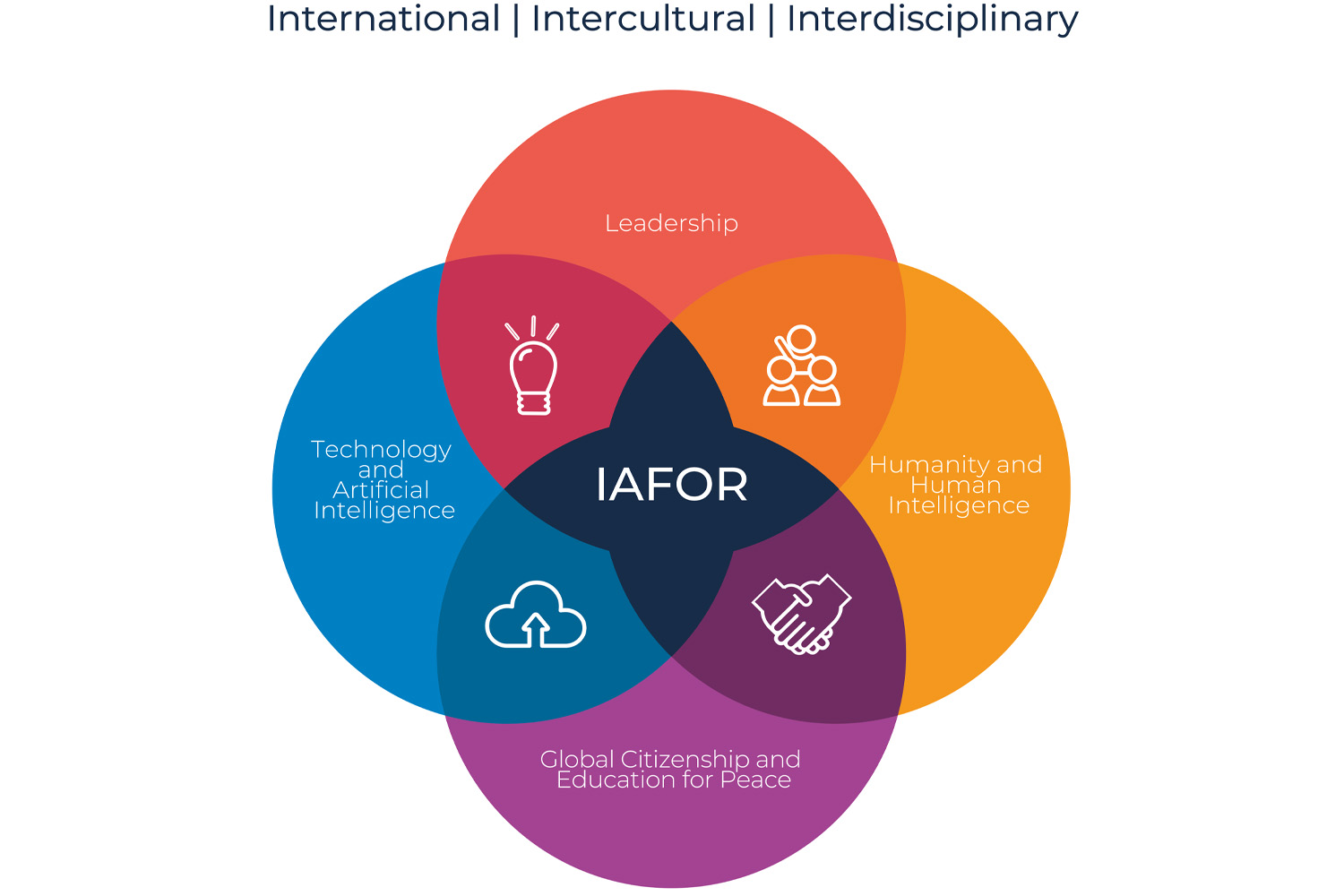
IAFOR Themes 2025-2029
Our selected themes for 2025-2029 bring together ideas and encourage research and synergies in the following areas:

  • Technology and Artificial Intelligence
  • Humanity and Human Intelligence
  • Global Citizenship and Education for Peace
  • Leadership
  • Our four themes can be seen as standalone themes, but they are also very much in conversation with each other. Themes may be seen as corollaries, complementary, or in opposition/juxtaposition with each other. The themes can be considered as widely as possible and are designed, in keeping with our mission, to encourage ideas across the disciplines.


    Read Last Year's Conference Report


    Conference News


    Sponsorship & Exhibition
    Sponsorship & Exhibition

    Sponsor the Event

    Enhance your brand visibility among a global audience of academics, policymakers, and professionals.

    IAFOR Conference Experience

    Exhibit at the Event

    Showcase your organisation or services in a dynamic conference setting.


    About IAFOR

    "Inspiring Global Collaborations"

    Founded in 2009, The International Academic Forum (IAFOR) is a mission-driven politically independent non-partisan and non-profit organisation dedicated to encouraging interdisciplinary discussion, facilitating intercultural awareness and promoting international exchange, principally through educational interaction and academic research. Based in Japan, its main administrative office is in Nagoya, and its research centre is in the Osaka School of International Public Policy (OSIPP), a graduate school of The University of Osaka. IAFOR runs research programs and events in partnership with universities, think tanks, and other associations. Through its international, intercultural and interdisciplinary conferences, research, and publications, IAFOR is a network hub for interdisciplinary discussion across Asia and beyond.
    Read more about IAFOR.

    Monty P. Satiadarma
    Tarumanagara University, Indonesia

    Biography

    Dr Satiadarma is a clinical psychologist who has been teaching psychology at Tarumanagara University since 1994. He was one of the founders of the Department of Psychology at Tarumanagara and served as the Dean of Psychology, Vice Rector, and Rector of the university. He earned a degree in psychology from the University of Indonesia, a degree in art therapy from Emporia State University, Kansas, a degree in family counselling from Notre Dame de Namur University, California, and a certification in clinical hypnotherapy from Irvine, California. He has published several books nationally with a focus on educational psychology and the use of music and art therapy. He provided treatment to survivors of the Indonesian tsunami through the International Red Cross and the United Nations. Dr Satiadarma is a board member and chair of the area for the International Council of Psychology and a founder and a board member of the Asian Psychology Association.

    The Forum (2026) | Living Together in Disrupting Times: Community and Intergenerational Learning
    Yukiko Sawano
    University of the Sacred Heart, Japan

    Biography

    Dr Yukiko Sawano is currently serving as a tenured Professor in the Department of Education at the University of the Sacred Heart, Japan. Her professional background includes significant roles as a government official and specialist of overseas research for the Japanese Ministry of Education (MEXT), as well as Senior Researcher at the Department of Lifelong Learning Policy Research of the National Institute for Educational Policy Research (NIER). Professor Sawano is a recognised expert in lifelong learning and comparative education, with a specific research focus on the Nordic model of lifelong learning and educational reform in post-Soviet countries.

    Professor Sawano served as President of the Japan Association of Lifelong Education from 2016 to 2018, and as a member of the Lifelong Learning Subgroup of the Central Council of Educational Reform from 2019 to 2025. Currently, she serves as the Co-coordinator for Research Network 6: Learning Cities/Regions within the ASEM Lifelong Learning Hub.

    Her recent publication includes Eastern Promise: New Wave Learning Cities in Japan in Edit. Seamus, OT, et.al. “Global Perspectives on Learning Cities”, Springer, 2025 (Co-author, In English), Lifelong Learning for GX and Sustainable Development in Europe, in “Bulletin of the Japan Association of Lifelong Education” No.46, 2025 (In Japanese), etc.

    Panel Presentation (2026) | Longevity, Happiness, and the Art of Community: Lessons from Japan and Beyond
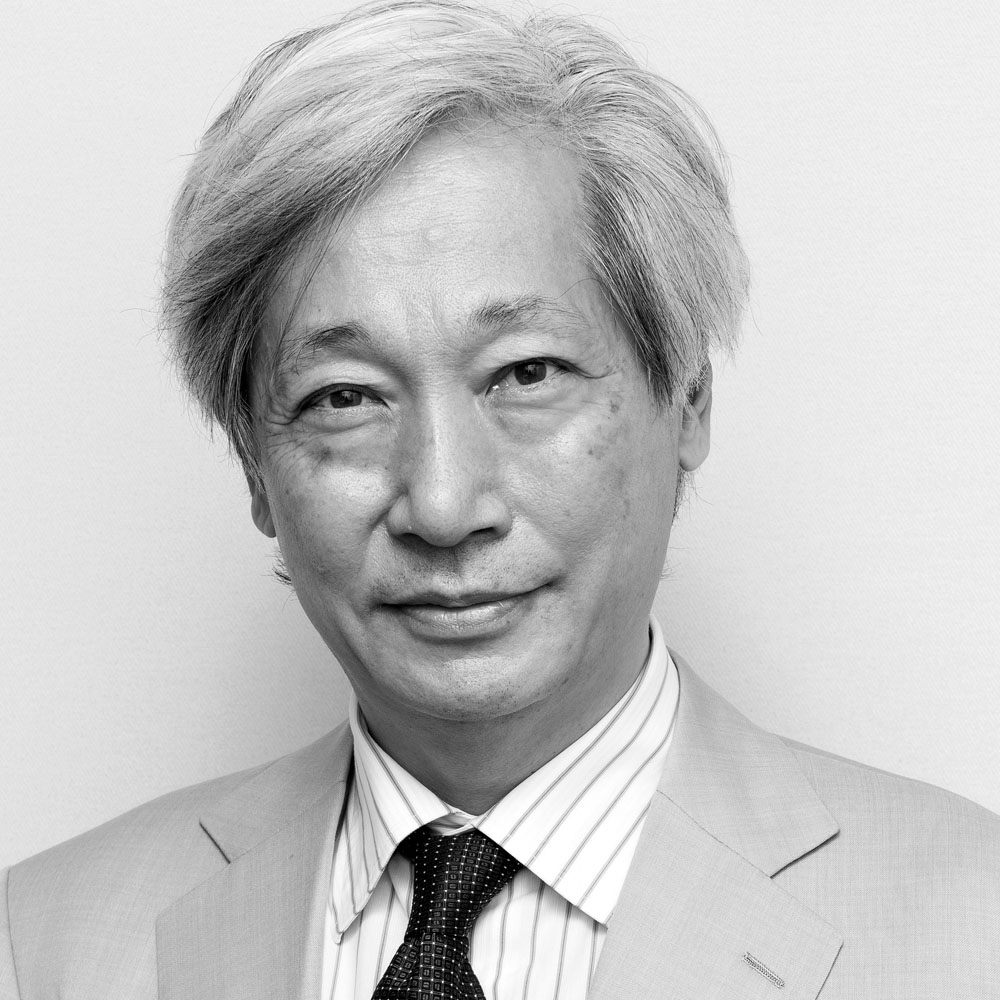
    Kiichi Fujiwara
    Juntendo University, Japan

    Biography

    Kiichi Fujiwara is a Professor in the Graduate School of International Liberal Arts at Juntendo University and Professor Emeritus of the University of Tokyo, Japan. He taught International Politics at the Graduate Schools of Law and Politics and the Graduate School of Public Policy until 2022. Professor Fujiwara founded the Institute for Future Initiatives at the University of Tokyo, a university think-tank that engages in multidisciplinary approaches to global challenges. His publications include Remembering the War (2001), A Democratic Empire (2002), Is There Really a Just War? (2003), Peace for Realists (winner of the Ishibashi Tanzan award, 2005), International Politics (2007), Conditions of War (2013), A Destabilizing World (2020), and Predatory Imperialism (forthcoming). Professor Fujiwara is a commentator on international affairs and writes a monthly column for Asahi Shinbun. He is also a film buff, and serves as a film reviewer for the NHK.

    Keynote Presentation (2026) | TBA
    Fathali M. Moghaddam
    Georgetown University, United States

    Biography

    Dr Fathali M. Moghaddam is an award-winning professor of psychology at Georgetown University, United States. He previously worked for the United Nations and McGill University, Canada. Dr Moghaddam has published extensively on intergroup relations, the psychology of democracy and dictatorship, and subjective justice. His most recent books include Political Plasticity: The Future of Democracy and Dictatorship (2023), The Psychology of Assimilation, Multiculturalism, and Omniculturalism (2024), The Psychology of Revolution (2024), and The New Immigration Challenge: A Psychological Exploration Toward Solutions (with M. Hendricks & R. Salas Schweikart, 2026). Professor Moghaddam currently holds an h-index of 67.

    Keynote Presentation (2026) | The Psychology of Democracy and Democratic Backsliding
    William C. Frick
    University of Sharjah, United Arab Emirates

    Biography

    Dr William C. Frick is currently a Professor in the College of Public Policy at the University of Sharjah, United Arab Emirates, and a faculty developer with the Institute of Leadership in Higher Education. Previously, he was the Rainbolt Family Endowed Presidential Professor of Educational Leadership and Policy Studies in the Jeannine Rainbolt College of Education at the University of Oklahoma, United States. He is the founding director of the Center for Leadership Ethics and Change, an affiliate body of the international Consortium for the Study of Leadership and Ethics in Education (CSLEE) of the University Council for Educational Administration (UCEA). Professor Frick has assumed editorial roles and been appointed to editorial boards in a number of prominent registers including, and most recently, Leadership and Policy in Schools, the Journal of Educational Administration, and the Journal of School Leadership. Prior to his higher education academic roles, Professor Frick was a practitioner in common education public schools including building and district-level administration. He has been awarded Core Fulbright U.S. Scholar and Fulbright Public Policy Fellow assignments. A doctoral graduate of The Pennsylvania State University, United States, his research interests include the philosophy of administrative leadership, school system reform within urban municipality revitalisation efforts, and broader cultural studies exploring the intersection of identity and schooling. A coauthored book with Jacqueline A. Stefkovich titled Best Interests of the Student: Applying Ethical Constructs to Legal Cases in Education (2006) is now in its third edition with Routledge. He has served in multiple officer and representative roles for national professional associations such as AERA, UCEA, and the CSLEE as well as local schools and school systems.

    Featured Workshop (2026) | Navigating Academic Publishing
    Seoyoun Kim
    University of Michigan & NACDA Program on Aging, United States

    Biography

    Dr Seoyoun Kim is affiliated with ICPSR and the Population Studies Center at the Institute for Social Research within the University of Michigan, United States She is also the director of the NACDA Program on Aging. She holds a dual-title PhD in Sociology and Gerontology from Purdue University, United States. Her research lies at the intersection of social gerontology, epidemiology, multi-omics, and cardiovascular health. Dr Kim explores how social and environmental factors shape health outcomes, particularly in ageing populations. She examines the impact of paid and unpaid productive engagement on the well-being of older adults, shedding light on the social determinants of health in later life. Her research also integrates multi-omics approaches to unravel the complex interactions between genetic, epigenetic, and environmental influences on health and ageing.

    Panel Presentation (2026) | Understanding Cognitive Impairment: Placing Dementia Within a Realistic Framework
    Héctor García
    Author, Japan

    Biography

    Héctor García was born in Spain and worked at CERN in Switzerland before moving to Japan, where he has lived for over 21 years. During his fifteen years in Tokyo’s IT industry, he wrote the international bestseller Xcentric Culture: A Geek in Japan (2008) and later The Magic of Japan: Secret Places and Life-Changing Experiences (2020). He is also the co-author of the global hit Ikigai: The Japanese Secret to a Long and Happy Life (2016), which has been translated into 70 languages. Notably, Ikigai holds the distinction of being the most translated book ever originally written in Spanish. To date, he has published ten books on Japanese culture.

    Panel Presentation (2026) | Longevity, Happiness, and the Art of Community: Lessons from Japan and Beyond
    Evangelia Chrysikou
    University College London, United Kingdom

    Biography

    Dr Evangelia Chrysikou, RIBA is Associate Professor within the Bartlett School of Sustainable Construction at University College London, United Kingdom, and Founder/Programme Director of the university’s MSc Healthcare Facilities. A multi-awarded RIBA architect and healthcare planner, Dr Chrysikou has published widely and won several prestigious grants and fellowships from international organisations, including Horizon 2020, UKRI, Wellcome, British Academy, Royal Society of New Zealand, and the Sasakawa Foundation. Her research interests lie at the spectrum of inclusion in relation to design, spanning across the disciplines of built environment, health, digital technologies and the social sciences. Dr Chrysikou is a member of the National Accessibility Authority, Hellenic Republic by invitation from the Greek Prime Minister, and a member of the Urban Land Institute’s (ULI) Life Sciences and Healthcare Council Leadership Committee. She was the coordinator of the Environment Section of the EIPonAHA, EU, and has worked as a consultant for international government bodies such as the Japanese MOFA, Peru Reconstruction Mechanism, and the British Government for projects related to healthcare planning and architecture. She was elected Vice-President of the Urban Public Health section of EUPHA in 2018.

    Keynote Presentation (2026) | Designing Care Futures: Built Environments, Health Systems, and Human–Robot Cohabitation in an Ageing World
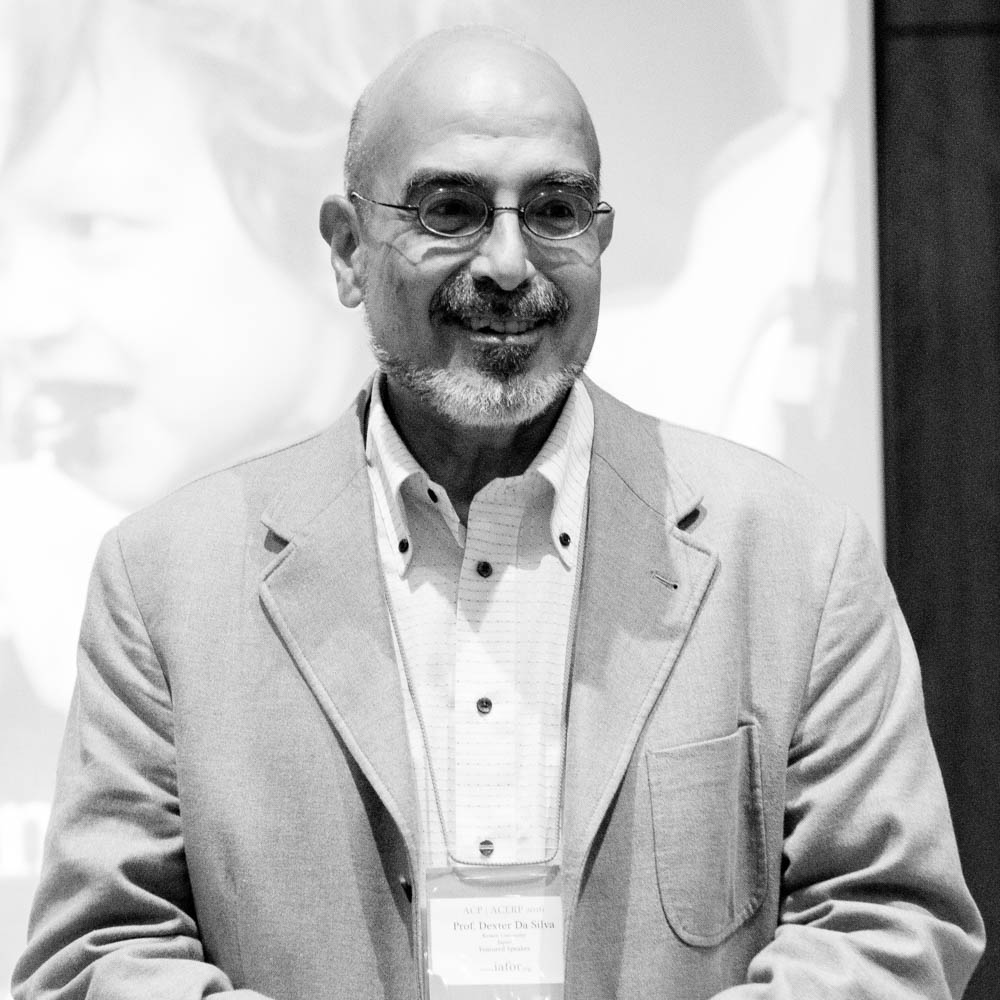
    Dexter Da Silva
    Keisen University, Japan

    Biography

    Professor Dexter Da Silva is Professor Emeritus at Keisen University in Tokyo, Japan, where he has been teaching for 35 years. He is an Educational Psychologist who has taught at junior high school, language schools, and universities in Sydney, Australia, and at various educational institutions in Japan. He was educated at the University of Sydney, Australia (BA, Dip. Ed., MA), and the University of Western Sydney, Australia (PhD). He has presented and co-presented at conferences throughout Asia, Australia, Europe, and the United States, and published or co-published a number of books, articles, and book chapters on education-related topics. He is a past president of the Asian Psychological Association and currently a Vice-President of IAFOR. As an Educational Psychologist, he is very interested in how Artificial Intelligence will continue to be incorporated into and impact research and theory on the nature, types, and uniqueness of Human Intelligence(s).

    Panel Presentation (2026) | Longevity, Happiness, and the Art of Community: Lessons from Japan and Beyond


    Previous Presentations

    Panel Presentation (2024) | Communication and Education for Peace
    Kathryn M. Lavender
    National Archive of Computerized Data on Aging (NACDA), United States

    Biography

    Kathryn Lavender is the Data Project Manager for the National Archive of Computerized Data on Aging (NACDA), the aging archive at the Inter-University Consortium for Political and Social Research (ICPSR) at the Institute for Social Research, the University of Michigan, United States. NACDA is funded by the National Institute on Aging (NIA) at the National Institutes of Health (NIH). Ms Lavender helps to guide data producers on data management and data sharing in the realm of data on aging populations/gerontology; promotes secondary research resources for public use; and contributes to spreading knowledge about quality metadata and data discovery through NACDA, as well as through the DDI Alliance. Ms Lavender has been an ICPSR staff member for more than 15 years and has been managing NACDA for nearly half of that time.

    Featured Workshop Presentation (2025) | Aging Data in the Digital Era: Leveraging NACDA Resources for Gerontological Research, Training, and Education

    Previous Presentations

    Featured Workshop Presentation (2025) | Aging Data: NACDA Resources for Gerontological Research, Training and Education
    Workshop Presentation (2023) | Aging Data: The National Archive of Computerized Data on Aging
    Workshop Presentation (2022) | NACDA: Data on Aging Resources from Research Ideation to Long-Term Preservation and Sharing
    Workshop Presentation (2021) | Creating Our New Normal: Responding, Adapting and Thriving in a Post-COVID 19 World
    Workshop Presentation (2021) | Aging Data: NACDA & an Open-source Repository
    Keynote Workshop Presentation (2020) | Aging Data: NACDA & an Open-source Repository
    Featured Workshop Presentation (2019) | Locating Data for Research: Data Collections and Resources for Thesis Writing, Teaching, and Grant Development for the Social Sciences and the Environment
    Featured Workshop Presentation (2018) | Locating Data for Research
    Lowell Sheppard
    Never Too Late Academy & IAFOR, Japan

    Biography

    Mr Lowell Sheppard is an author, speaker, social entrepreneur, and Fellow of the Royal Geographical Society with a lifelong commitment to social impact, ethical leadership, and exploration. He has worked extensively with established NGOs and start-ups, most notably as the Founder of HOPE International Development Agency Japan. Under his leadership, HOPE-JP has grown to rank among the top 2% of charitable organizations in Japan, achieving the prestigious nintei tax-deductible certification. Mr Sheppard has been a longtime supporter and past speaker at IAFOR Conferences. He currently serves as the organisation’s Director of Development, seeking to expand the Global Fellowship Programme and scholarship opportunities. Mr Sheppard’s passion for social and environmental improvement projects has driven his career. For over two decades, Lowell has served as an informal advisor to companies and boards around the globe.

    In pursuit of adventure and deeper insights into ageing and longevity, Mr Sheppard moved onto a sailboat five years ago and has been sailing full-time around Japan, embracing the life of a digital nomad and explorer. After spending fifteen months moored and deeply immersed in the Blue Zone culture of Okinawa, Mr Sheppard set out in 2025 to revisit a journey that had first shaped his life twenty-five years earlier: chasing Japan’s cherry blossoms from south to north. What began as a seasonal passage became a year-long quest, repeatedly visiting and revisiting Japan’s key longevity hotspots—rural prefectures, islands, and communities where people continue to live long, healthy, independent lives. Between these journeys, he regularly returned to his own ‘longevity laboratory’” a remote island village where he lives and observes daily community life at close quarters, blending slow travel, field research, and lived experience.

    As an author, his book Never Too Late (Lion Hudson PLC, 2005), published in four languages, became the inspiration for his latest social enterprise, the Never Too Late Academy. His most recent book, Dare to Dream, was shortlisted for the UK Business Book of the Year Award in 2023.

    Panel Presentation (2026) | Longevity, Happiness, and the Art of Community: Lessons from Japan and Beyond

    Previous Presentations

    Panel Presentation (2022) | Missing You: Resilience, Renewal and Rebuilding Intergenerational Contact Within Families
    Keynote Presentation (2018) | Surviving and Thriving: In Pursuit of a Sustainable World – A Unique and Personal Reflection
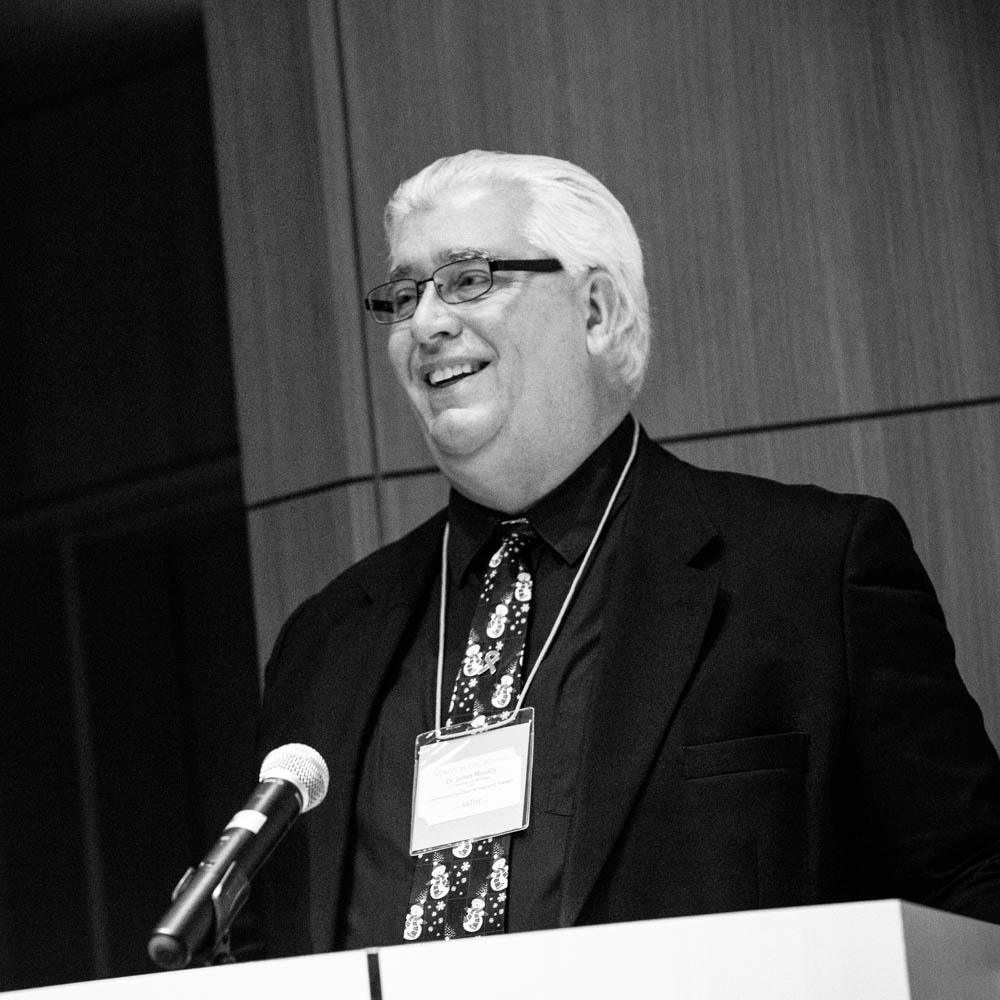
    James W. McNally
    University of Michigan & NACDA Program on Aging, United States

    Biography

    Dr James W. McNally is the Director of the NACDA Program on Aging, a data archive containing over 1,500 studies related to health and the aging life course. He currently does methodological research on the improvement and enhancement of secondary research data and has been cited as an expert authority on data imputation. Dr McNally has directed the NACDA Program on Aging since 1998 and has seen the archive significantly increase its holdings with a growing collection of seminal studies on the aging life course, health, retirement and international aspects of aging. He has spent much of his career addressing methodological issues with a specific focus on specialised application of incomplete or deficient data and the enhancement of secondary data for research applications. Dr McNally has also worked extensively on issues related to international aging and changing perspectives on the role of family support in the later stages of the aging life course.

    Panel Presentation (2026) | Understanding Cognitive Impairment: Placing Dementia Within a Realistic Framework

    Previous Presentations

    Workshop Presentation (2023) | Aging Data: The National Archive of Computerized Data on Aging
    Workshop Presentation (2022) | NACDA: Data on Aging Resources from Research Ideation to Long-Term Preservation and Sharing
    Panel Presentation (2022) | Helping Hands: Robotic Assistance in Supporting and Maintaining Social Interactions with Elders
    Panel Presentation (2022) | Missing You: Resilience, Renewal and Rebuilding Intergenerational Contact Within Families
    Workshop Presentation (2021) | Creating Our New Normal: Responding, Adapting and Thriving in a Post-COVID 19 World
    Workshop Presentation (2021) | Aging Data: NACDA & an Open-source Repository
    Keynote Workshop Presentation (2020) | Aging Data: NACDA & an Open-source Repository
    Featured Presentation (2019) | Defining and Measuring Resilience in an Aging World
    Featured Workshop Presentation (2019) | Locating Data for Research: Data Collections and Resources for Thesis Writing, Teaching, and Grant Development for the Social Sciences and the Environment
    Featured Panel Presentation (2018) | Health Across the Lifecourse
    Featured Workshop Presentation (2018) | Locating Data for Research
    Featured Presentation (2017) | Methodologies for the Collection of Comparative Community Level Public Health Data: Obtaining Powerful and Statistically Meaningful Findings for Small Populations
    Featured Panel Presentation (2017) | Easts Meets West – Healthy, Active and Beautiful Aging in Asia